What Is Quartz Stone?
February 12, 2026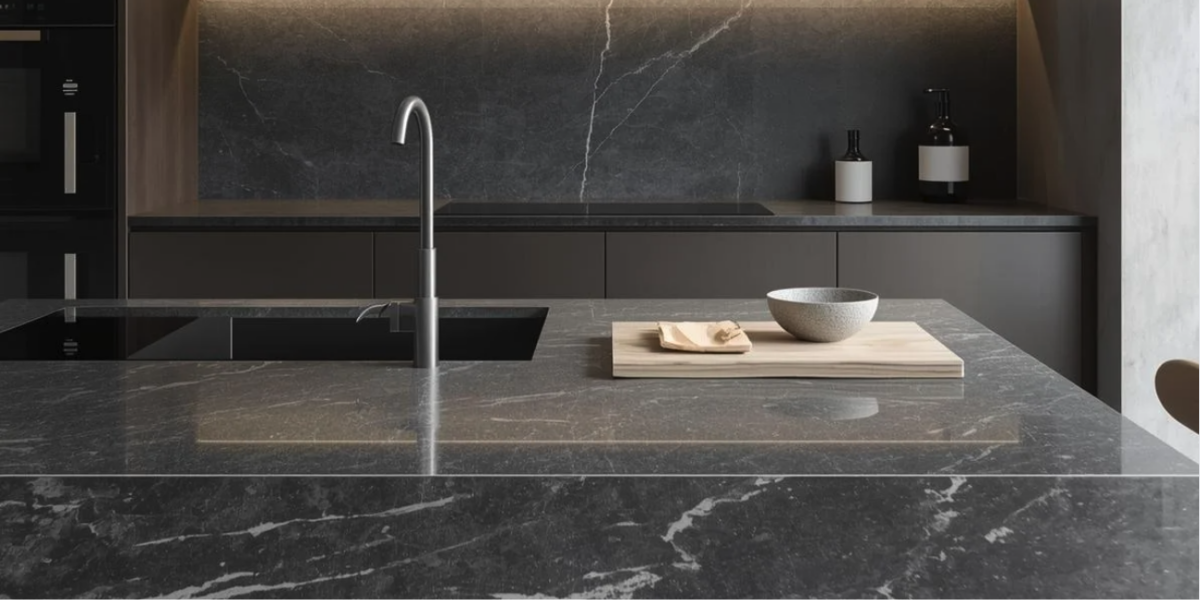
About Sintered Stone
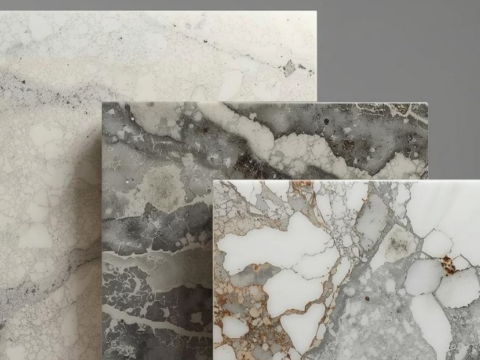
Sintered stone is a cutting-edge innovation in engineered stone, also referred to as porcelain slab, pressure stone, compact stone, and ultra-compact surface.
These terms all describe the same type of high-performance stone material, often seen as a strong competitor to quartz stone due to its durability, heat resistance, and eco-friendly properties.
Manufactured through a process called sintering, this method replicates the natural formation of stones like granite, marble, and quartzite—but in a much shorter time and with enhanced precision over the final product. Unlike quartz stone, which requires resin as a binding agent, sintered stone is created without resin, making it more resistant to heat and chemicals.
The raw materials are subjected to extreme heat and pressure, causing them to bond at a molecular level. This process results in an ultra-dense, compact surface with minimal porosity, setting it apart from both quartz and porcelain surfaces.
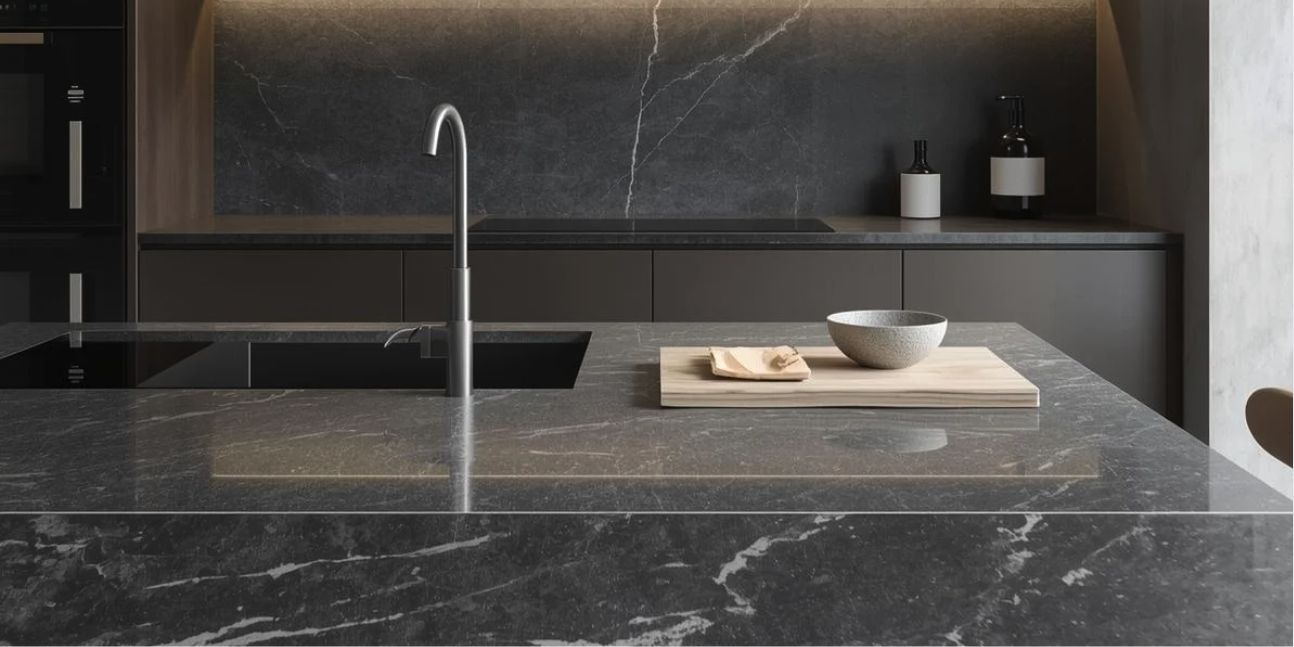
Sintered Stone vs. Porcelain Slab vs. Quartz
Material Composition
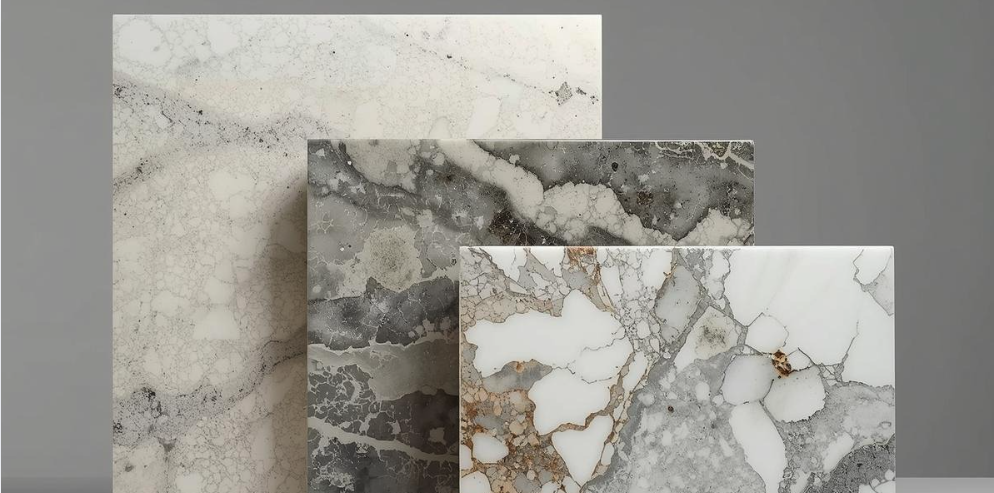
Porcelain slabs tend to have a higher glass content compared to sintered stone, giving them a slightly different texture and finish. Meanwhile, quartz stone consists mainly of crushed quartz minerals mixed with resins, making it strong but less heat-resistant than sintered stone.
Compression Weight
Sintered stone undergoes extreme compression—around 25,000 tons—while porcelain slabs typically endure 15,000 to 18,000 tons of pressure.
To put it into perspective, a fully-loaded cargo ship can weigh over 12,000 tons. That means sintered stone is compressed with pressure equivalent to more than two full cargo ships, while porcelain slabs are compressed at just over one cargo ship's weight.
Heating Process
Sintered stone is heated at an intense 1200°C, while porcelain slabs are fired at a lower temperature of 800-1000°C. Quartz stone, on the other hand, is cured at around 90-150°C, making it significantly less heat-resistant than sintered stone.
In Malaysia, brands like Dekton and Neolith classify their products as sintered stone, while compact stone or pressure stone often falls under the porcelain slab category. Quartz countertops remain popular for their affordability, but sintered stone offers superior durability.
Key Features of Sintered Stone vs. Quartz
Drawbacks of Sintered Stone
- Cost – Sintered stone is more expensive than quartz countertops or porcelain slabs, but it offers superior durability and long-term value.
- Weight – Sintered stone is significantly denser than quartz, making it heavier and requiring professional installation.
- Impact Sensitivity – While sintered stone is extremely durable, it can chip or crack under strong impact, similar to quartz and porcelain.
- Difficult Repairs – Unlike quartz countertops, which can sometimes be repaired, sintered stone repairs can be challenging and costly.
- Pattern Depth – Quartz stone often features designs that run through the entire slab, whereas sintered stone designs are printed on the surface. If chipped, the interior layer may not match the outer pattern.
Sintered Stone vs. Quartz – Which One to Choose?
|
Feature |
Sintered Stone |
Quartz Stone |
|
Porosity |
Non-porous |
Low porosity (resin-based) |
|
Heat Resistance |
Up to 300°C |
Up to 150°C |
|
Scratch Resistance |
Mohs 8 |
Mohs 6-7 |
|
UV Resistance |
100% UV-resistant |
May fade over time |
|
Chemical Resistance |
Resistant to acids & alkalis |
Sensitive to strong acids |
|
Eco-Friendliness |
Natural & recycled materials |
Contains resins & VOCs |
|
Maintenance |
Easy to clean |
Requires regular sealing |
Practical Uses of Sintered Stone
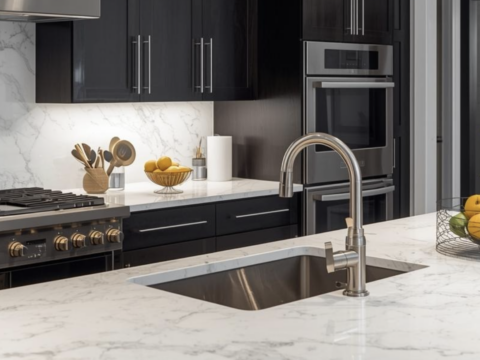
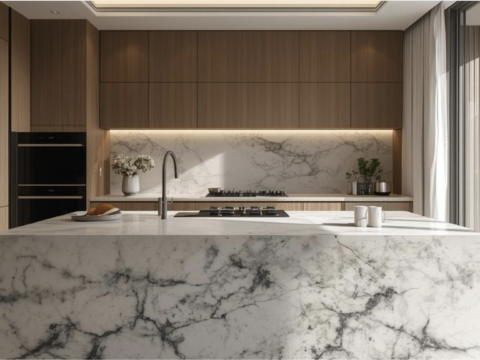
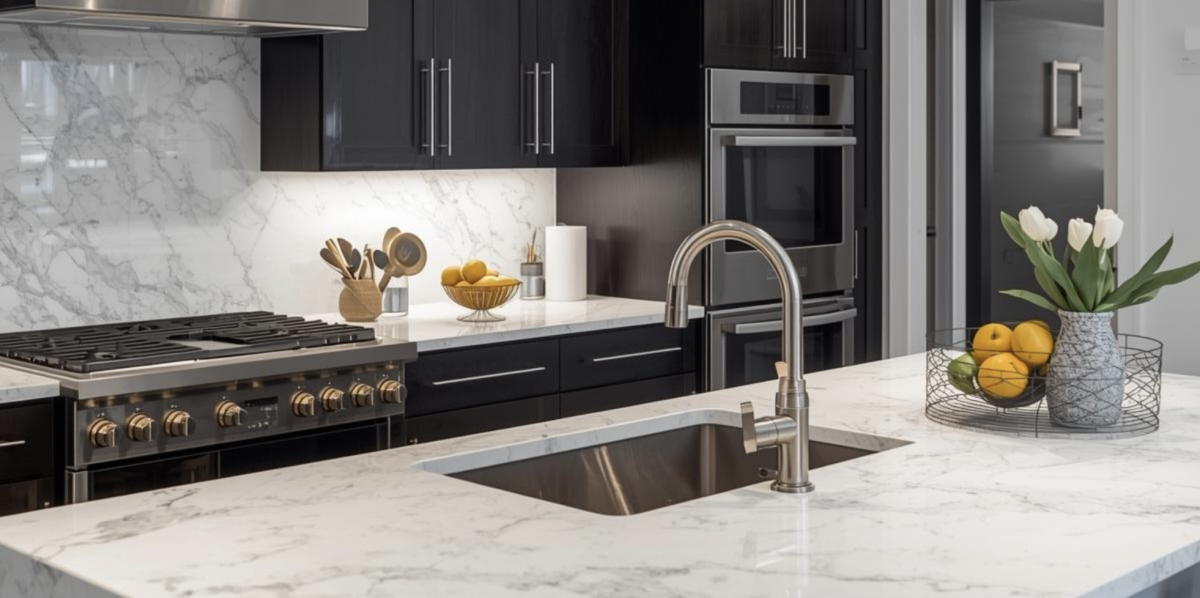
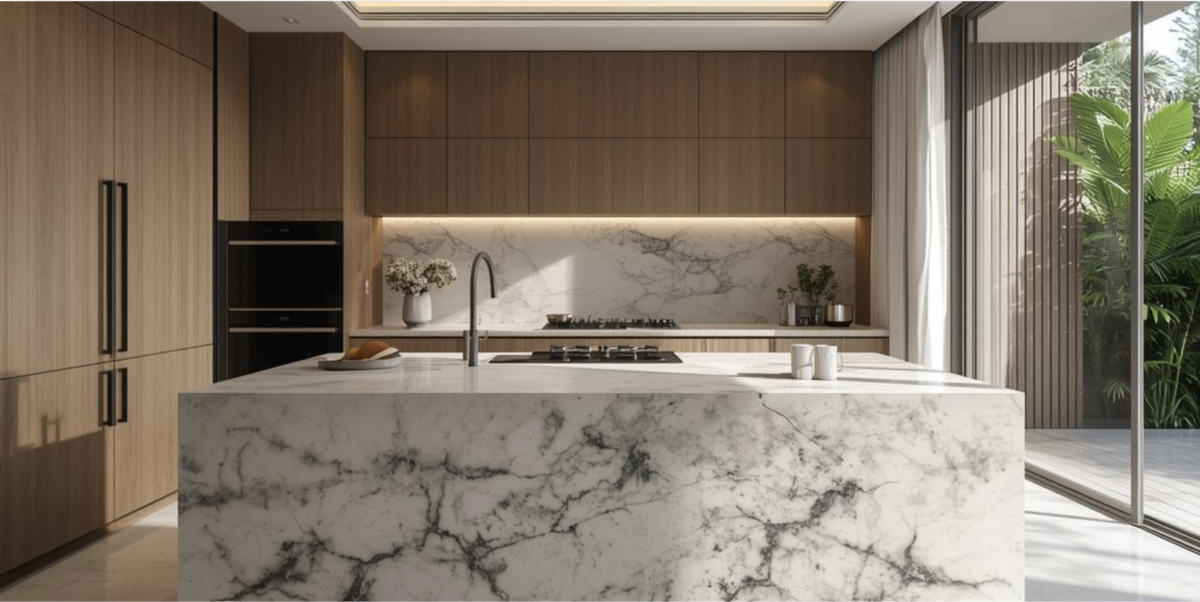
- Kitchen Countertops – Resistant to heat, stains, and scratches, making them ideal for preparing meals
- Wall Cladding & Facades – Adds modern style to indoor and outdoor walls while resisting moisture and graffiti.
- Flooring – Durable, slip-resistant, and withstands heavy foot traffic better than quartz.
- Other Applications – Used for fireplace surrounds, shower panels, pool decks, and even outdoor furniture.
TL;DR:
Sintered stone blends nature and technology to create a material that’s visually stunning, incredibly durable, and environmentally friendly. Compared to quartz stone, it offers higher heat resistance, better scratch resistance, and superior weatherproof qualities. However, quartz remains a popular option for those prioritizing affordability.
Looking for the perfect sintered stone solution for your home?